
 Side sleeping
Room for your shoulder
The winged sides give your shoulder and arm a more natural place to settle while the raised edge supports your neck.

FOR ANYONE TIRED OF TRYING PILLOWS
Butterfly contour support for side + back sleepers
You have tried soft, firm, foam—and still wake up stiff. ALLIN SLEEP uses butterfly geometry to support your head, neck, shoulders, and arms as one connected system.
Ships free within the United States
Sleep on it. If it's not right for you, request a return within 14 days of delivery under our current return policy.
Its butterfly shape coordinates a central head cavity, raised neck support, and side wings instead of asking one flat surface to support everything.
It is designed for side and back sleepers. If you sleep only on your stomach or prefer an ultra-soft, unstructured pillow, it may not be your best fit.
U.S. shipping is free. Current store rules allow return requests within 14 days; see the return policy for conditions.
YOUR PILLOW GRAVEYARD MAKES SENSE
You were buying the same rectangular logic in softer, firmer, cooler, or more expensive versions.
One felt like a speed bump. Another became an immovable slab. The soft one disappeared under your head by 2 a.m. When every option asks one flat rectangle to manage your head, neck, shoulders, and arms, changing the foam alone can only do so much.
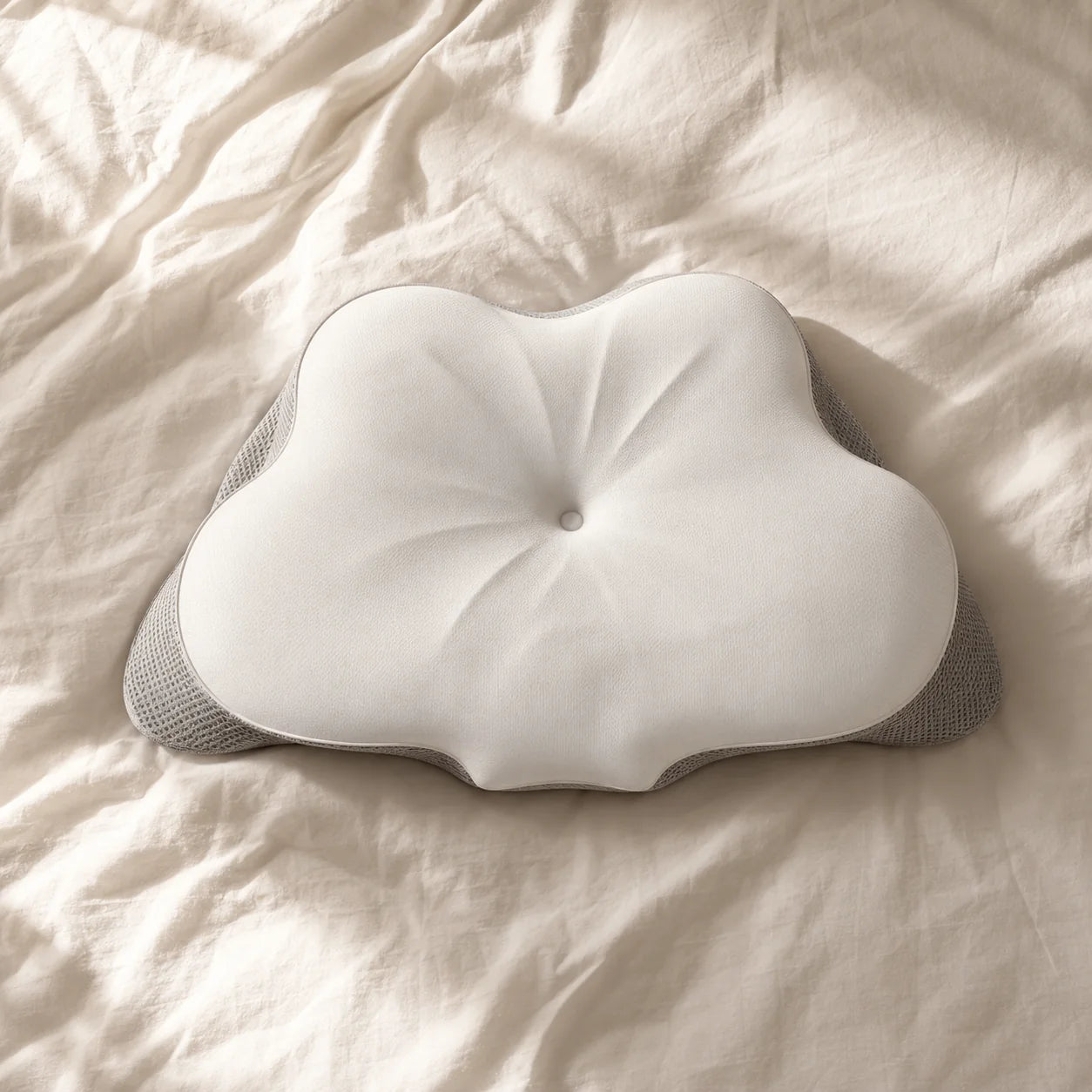
THE SHAPE DOES THE THINKING
A traditional pillow treats the upper body as one straight line. Your body is not. Your head needs room to settle, your neck needs a supportive edge, your shoulder needs clearance, and your arms need somewhere natural to rest.
The butterfly contour brings those needs into one shape: a central cavity accommodates the head, raised edges support the neck, and side wings create space around the shoulders and arms. Slow-rebound memory foam then adapts to your contours without turning the pillow into a shapeless pile.
One coordinated shape, designed for a more neutral sleeping position.
HOW IT ACTUALLY WORKS
Tap a point on the pillow to see what it's doing while you sleep.
Instead of resting on top of the foam, your head settles into it. That's the difference between a pillow that pushes back and one that holds still.
On a flat pillow, there's a gap between your neck and the surface — your muscles fill that gap all night without you noticing. This edge fills it instead.
Side sleepers know this problem: your arm ends up trapped under the pillow, or your shoulder pushes it out of position. The wing cutout gives both somewhere to be.
Slow-recovery foam holds its shape under sustained weight instead of compressing flat — which is usually what turns a cheap pillow into a short-term fix.
A MORE PURPOSEFUL SHAPE
DESIGNED AROUND HOW YOU ACTUALLY SLEEP
You should not have to rebuild your pillow every time you change position. The contour is designed to keep useful support available when you move between your side and your back.
Side sleepingThe winged sides give your shoulder and arm a more natural place to settle while the raised edge supports your neck.
 Back sleeping
The central cavity accommodates the head while the neck contour helps support a more neutral line through the night.
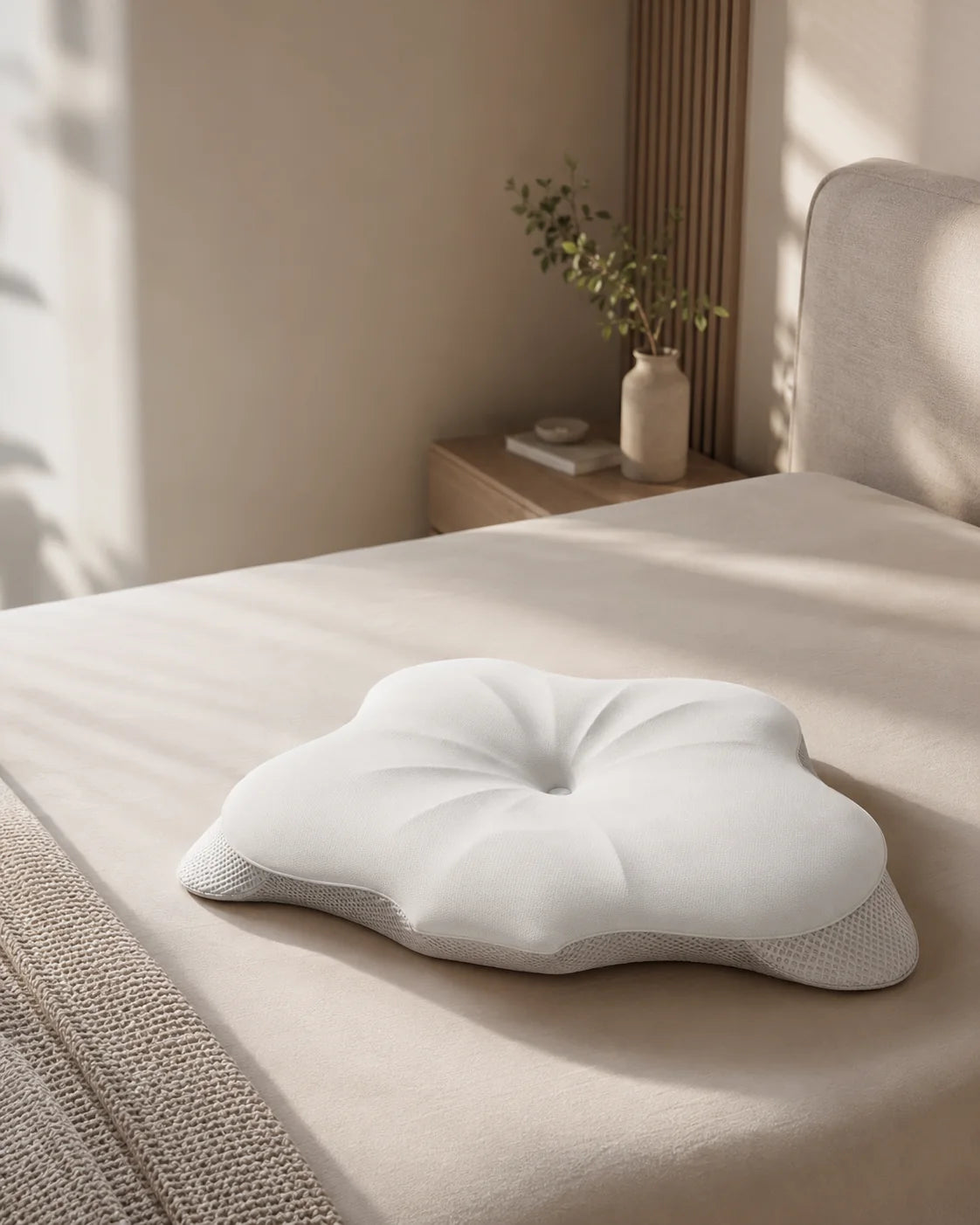
WHAT YOU ARE ACTUALLY SLEEPING ON
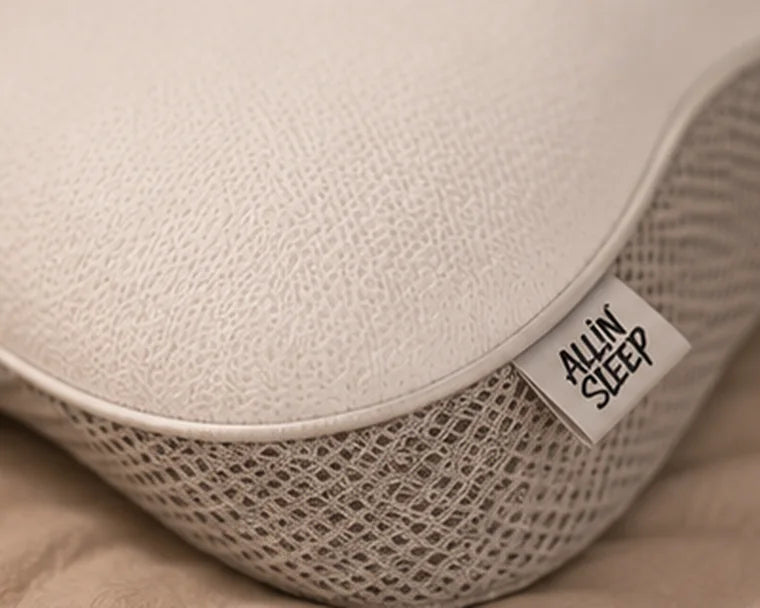
A SIMPLE SETUP
Rotate the pillow and start with the neck-support edge that feels most natural for your frame.
Let your head settle into the cavity with the contour supporting the curve beneath your neck.
On your side, give your shoulder and arm the open space created by the butterfly shape.
A shaped pillow can feel unfamiliar after years on soft fill or a flat rectangle. Start with the lower-feeling edge, adjust your position, and allow several nights to decide whether the support suits you. Comfort should improve—not feel forced.

THE 3 A.M. PROBLEM
Every position change is your body searching for support the pillow isn't giving it. When your head, neck and shoulders feel more consistently supported, there may be less need to keep repositioning the pillow.
BEFORE YOU COMMIT TO IT
Your neck has spent years adapting to a different shape, so a short adjustment period can feel normal.
As you settle into a consistent edge and position, some people notice less need to reposition the pillow through the night.
For most people, this is when a new pillow shape stops feeling new.
BEFORE YOU CHOOSE
You may request a return within 14 days under the store’s current return rules. The item must meet the conditions stated in the return policy; review that policy before ordering.
Standard shipping within the United States is free. Delivery timing appears at checkout and can vary by destination and order processing.
Yes. The pillow is designed for both positions: the center supports back sleeping, while the winged sides create useful shoulder and arm space when you turn onto your side.
Remove and wash the outer cover according to its care label. Do not machine-wash the memory foam core; keep it dry and allow it to air out when needed.
That is common with a contoured pillow. Try the lower-feeling edge, fine-tune where your neck rests, and allow several nights to assess comfort. Stop using it if you experience persistent discomfort.
A DIFFERENT KIND OF PILLOW DECISION
Your pillow should not be the reason your neck feels punished before the morning begins. Choose a shape designed to support how your upper body actually rests.
Choose Your ALLIN SLEEP Pillow